Kwa Mansah v. Amba kitse land in Saltpond
Transcription
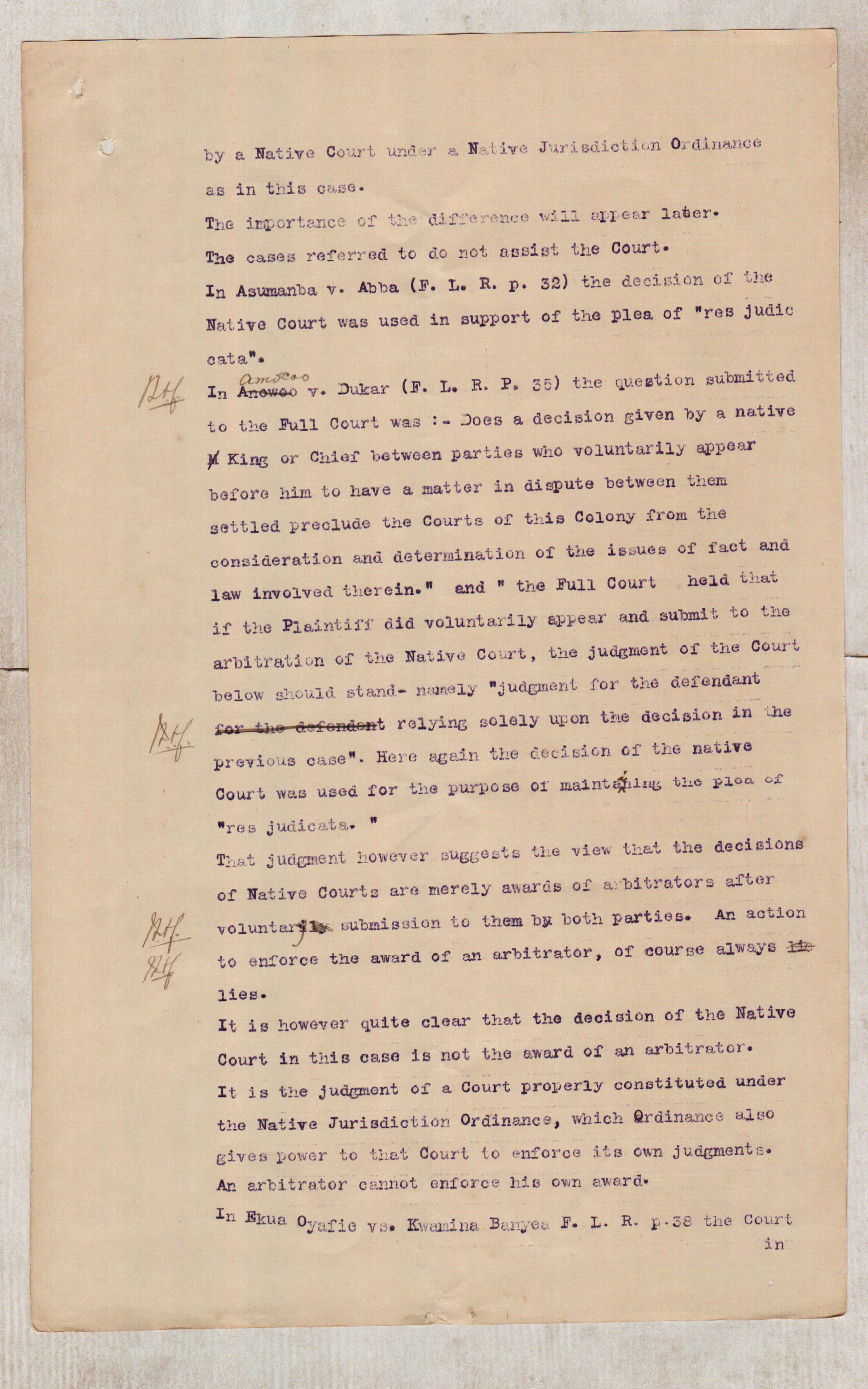
by a Native Court under a Native Jurisdiction Ordinance as in this case. The importance of the difference will appear later- The cases referred to do not assist the Court.
In Asumanba v. Abba (F. L. R. p. 32) the decision of the Native Court was used in support of the plea of "res judiccata".
In amscoa v. Dukar (F. L. R. P. 35) the quetion submitted to the Full Court was :- Does a decision given by a native King or Chief between parties who voluntarily appear before him to have a matter in dispute between them settled preclude the Courts of this Colony from the consideration and determination of the issues of fact and law involved therein." and " the Full Court held that if the Plaintiff did voluntarily apear and submit to the arbitration of the Native Court, the judgment of the Court below should stand — namely "judgment for the defendant relying solely upon the decision in The previous case ". Here again the decision of the native Court was used for the purpose 01 maintaining the plea of "res judicata. "
That judgment however however suggest the view that the decisions of Native Courts are merely awards of arbatrators after voluntarily submission to them by both parties. An action to enforce the award of an arbitrator, of coure always lies.
It is however quite clear that the decision of the Native Court in this case is not the award of an arbitrator. It is the judgment of a Court properly constituted under the Native Jurisdiction Ordinance, which Ordinance also gives power to that Court to enforce its own judgment. An arbitrator cannot enforce his own award.
In Ekua Oyafie vs. Kwamina Banyea F.L.R. p.38 the court in
Typed from the scan. Spellings follow the original and may contain mistakes.