International Rubber Exhibition
Transcription
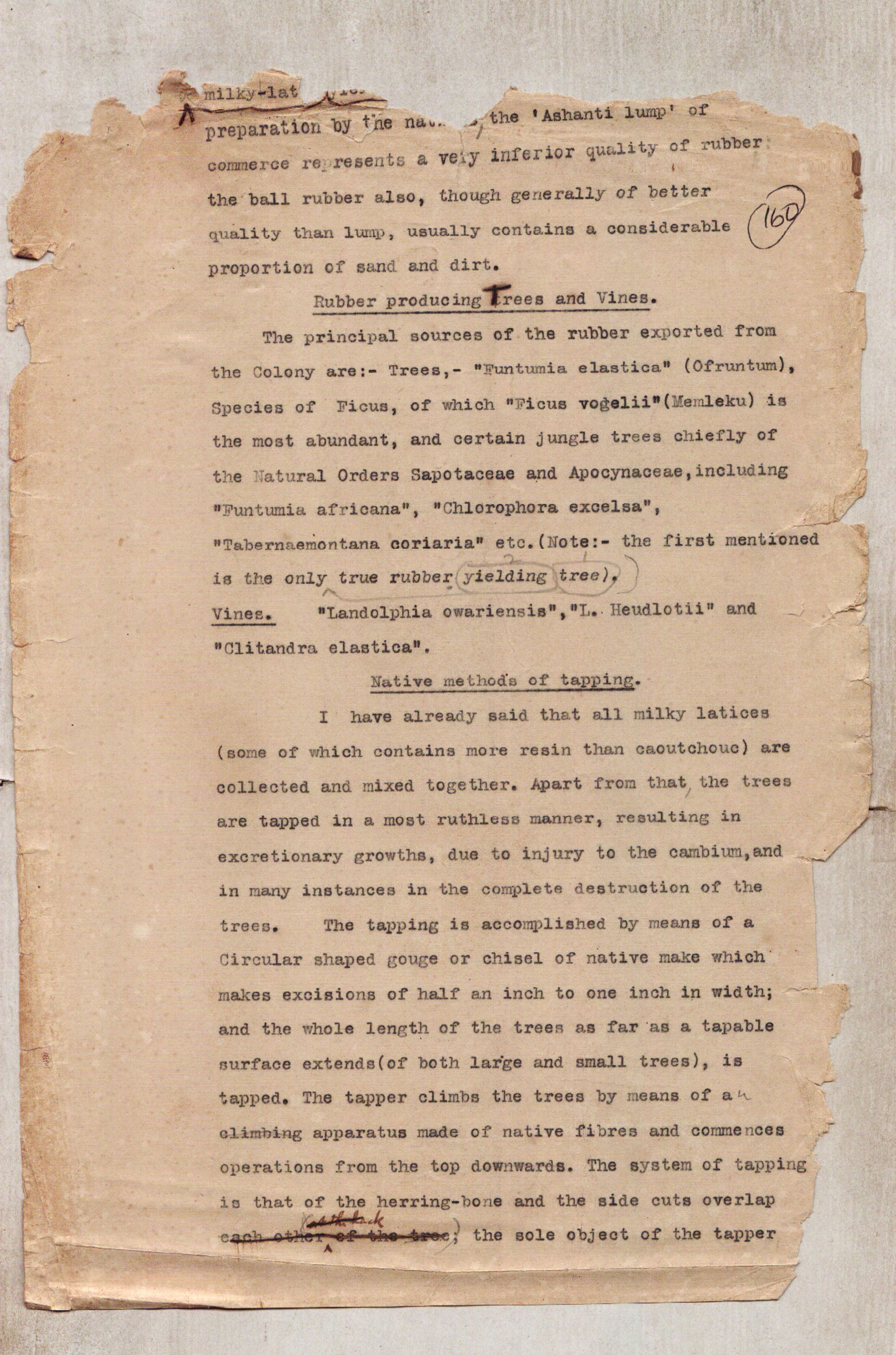
commerce represents a very inferior quality of rubber the ball rubber also, though generally of better quality than lump, usually contains a considerable proportion of sand and dirt.
Rubber producing Trees and Vines.
The principal sources of the rubber exported from the Colony are:- Trees,- " Funtumia elastica" (Ofruntum), Species of Ficus, of which "Ficus vogelii" (Memleku) is the most abundant, and certain jungle trees chiefy of the Natural Orders Sapotaceae and Apocynaceae, including "Funtumia africana", "Chlorophora excelsa", "Tabernaemontana coriaria" etc. (Note:- the first mentioned is the only true rubber yielding tree). Vines. "Landolphia owariensis", "L. Heudlotii" and "clitandra elastica".
Native methods of tapping.
I have already said that all milky latices (some of which contains more resin than caoutchouc) are collected and mixed together. Apart from that the trees are tapped in a most ruthless manner, resulting in excretionary growths. due to injury to the cambium, and in many instances in the complete destruction of the trees. The tapping is accomplished by means of a Circular shaped gouge or chisel of native make which makes excisions of half an inch to one inch to one inch in width; and the whole length of the trees as far as a tapable surface extends (of both large and small trees), is tapped. The tapper climbs the trees by means of a climbing apparatus ,made of native fibers and commences operations from the top downwards. The system of tapping is that of the herring-bone and the side cuts overlap the sole object of the tapper
Typed from the scan. Spellings follow the original and may contain mistakes.